Bachelor Thesis · WS 2025/26 – SS 2026 · TU Graz
RTN / TDDS Measurement Setup
Single-transistor defect characterisation under X-ray Total Ionising Dose
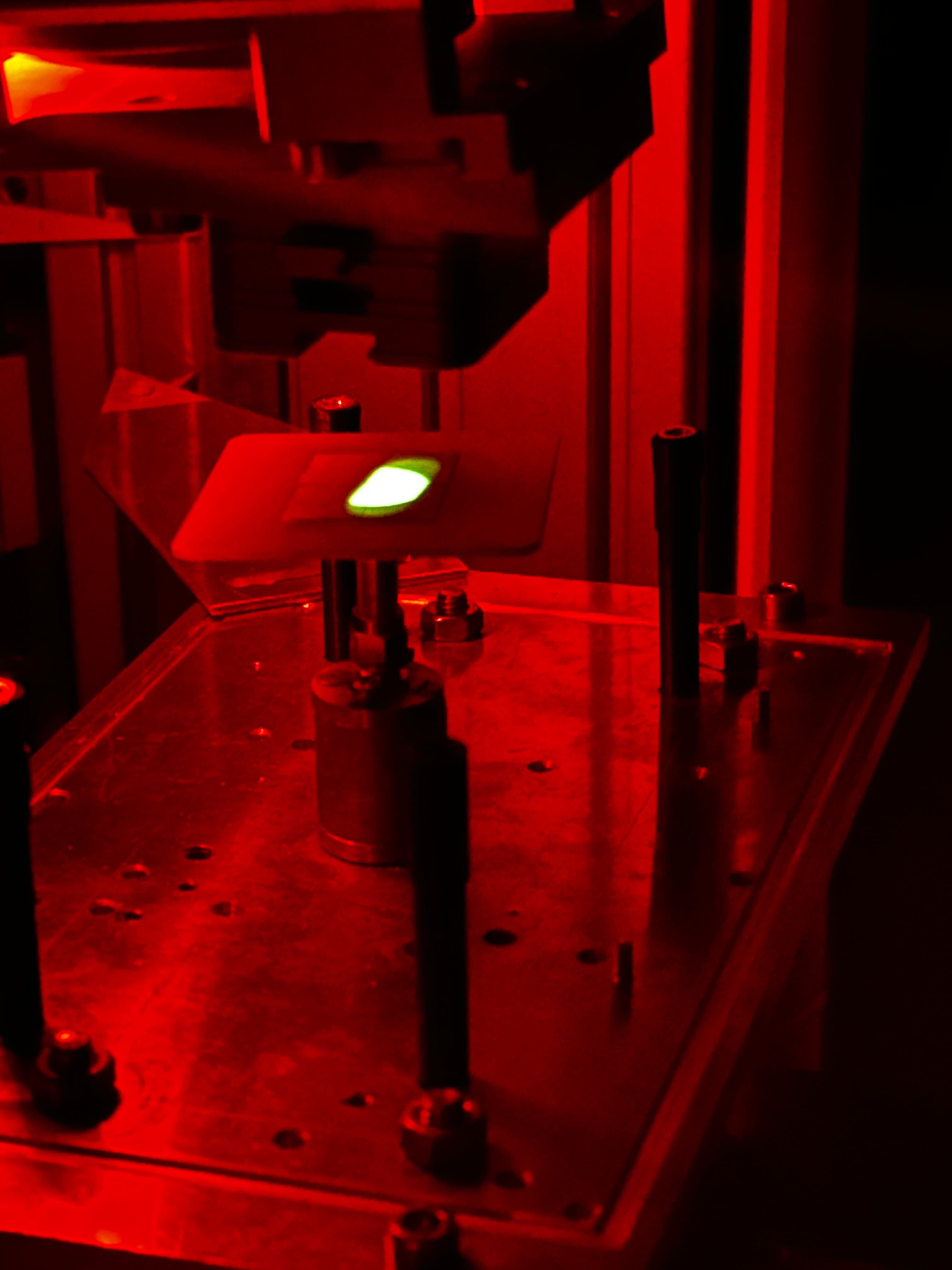
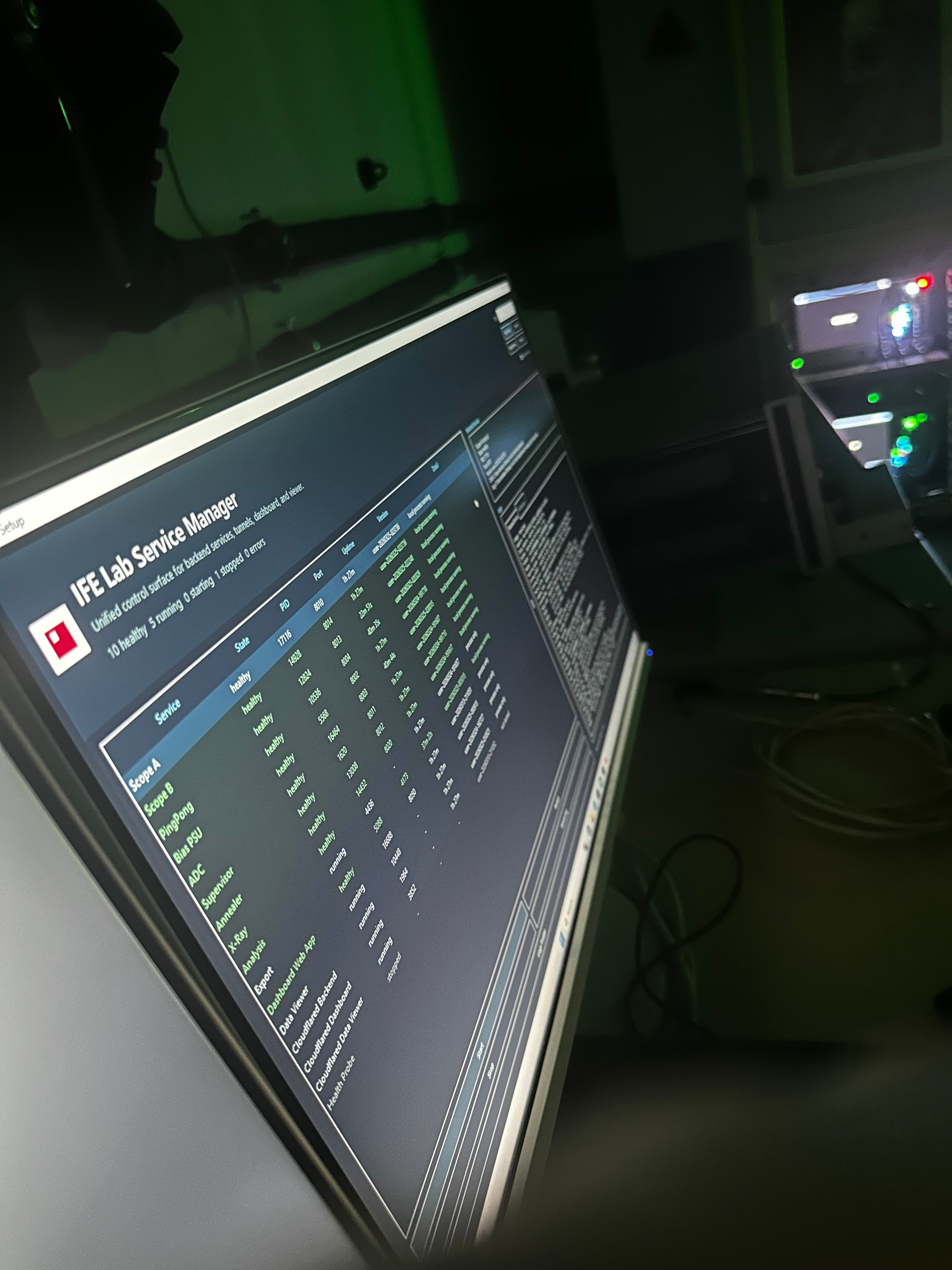
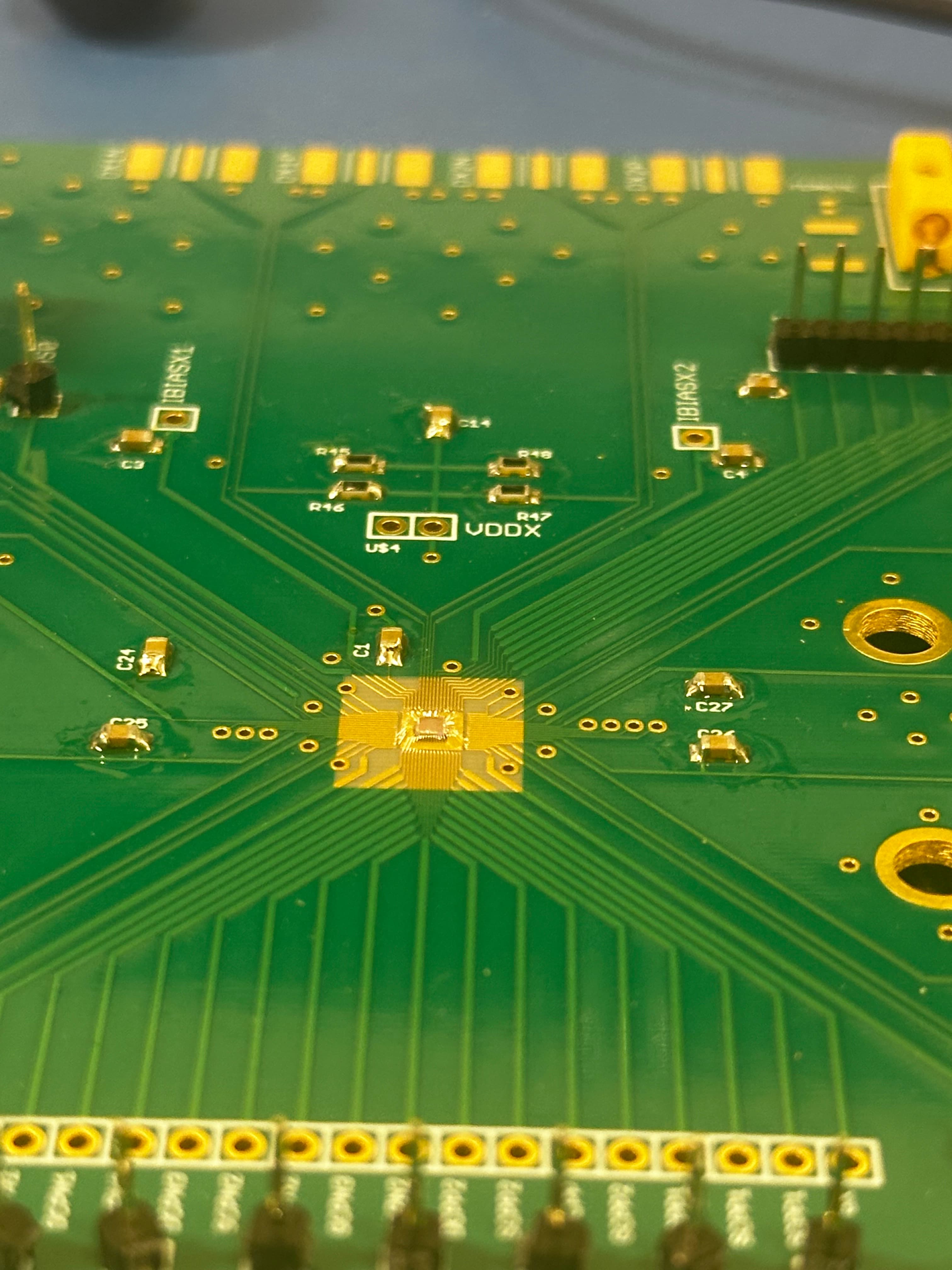
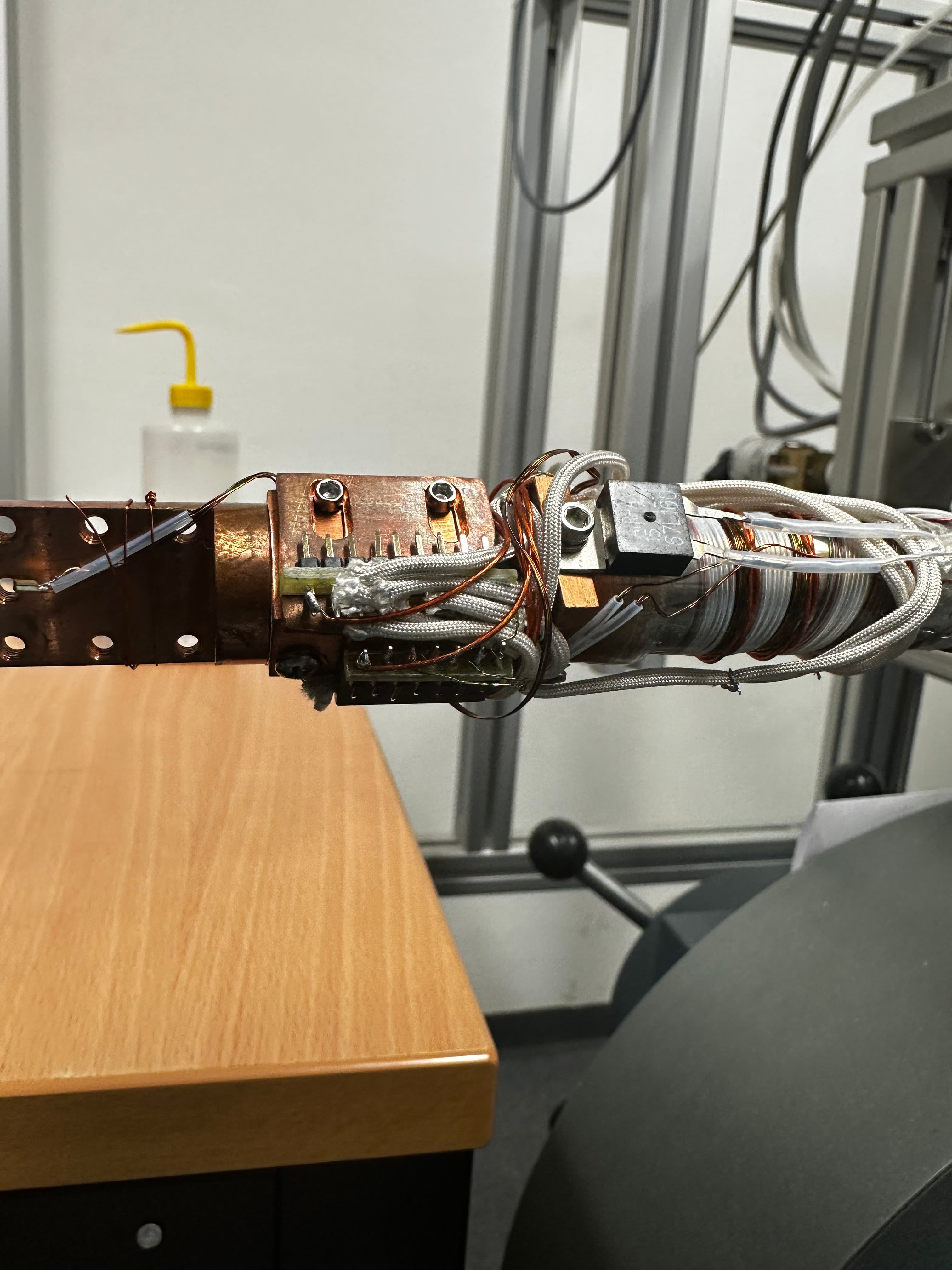
For my bachelor thesis I built a complete acquisition and control system for long, single-transistor measurements. I built it from scratch because no standard bench workflow could meet the bandwidth, resolution and operational constraints the experiment needed all at once.
The device under test is a single 40/120 nm MOSFET on a SIRENS chip. I measure its source current through a Femto DLPCA transimpedance amplifier (106 V/A, 105 Hz bandwidth) mounted right on the DUT breakout path. Two RTO2044 oscilloscopes run in a ping-pong configuration — one captures while the other uploads — so there is no acquisition dead time across runs of up to two days.
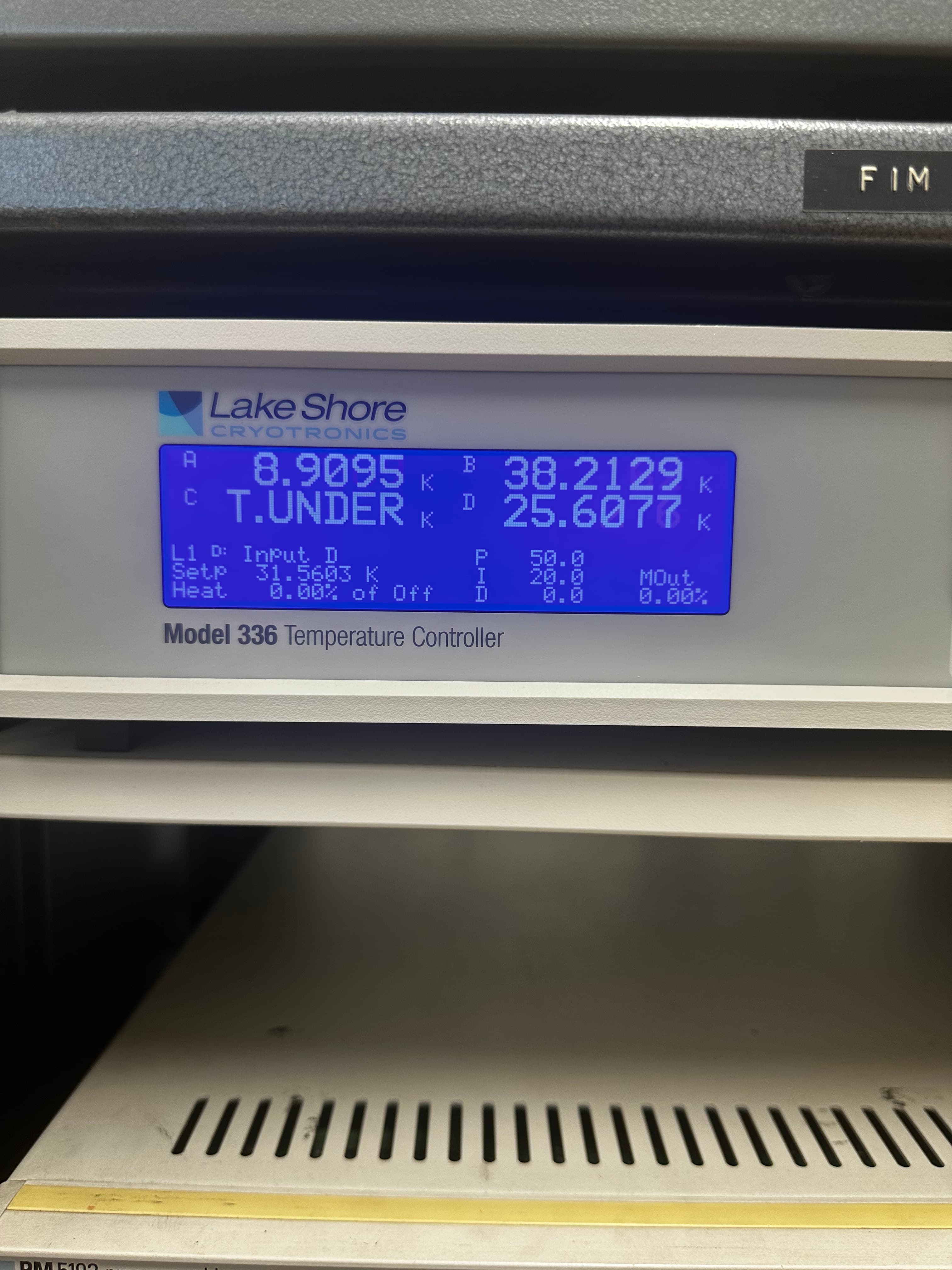
The same setup runs X-ray Total Ionising Dose experiments at 40 kV / 37 mA, aiming for up to 100 MRad in 42 hours, plus in-situ annealing up to 150 °C through a resistive heating cartridge I control over an ESP8266 thermocouple interface.
1100 pA
Noise floor @ 100 kHz
100 pA
Noise floor @ 10 Hz
2 days
Max run duration
150 °C
Max anneal temp
Software stack
I split the control software into nine Python microservices that drive the instruments over VISA/HiSLIP/LXI/RS232, each call authenticated with HMAC-SHA256. A React/Vite dashboard is the operator UI; a Dash/Flask waveform viewer with Zarr pyramid caching keeps load times under 5 ms at any zoom level, even over captures with millions of samples.
scope_serviceRTO2044 oscilloscope pair — HiSLIPbias_serviceKeysight B2962A SMU — LAN/LXIadc_serviceADC6242 SMU — USBsupervisor_servicePID closed-loop controlannealing_serviceESP8266 heater — up to 150 °Cxray_serviceGE ISO-DEBYEFLEX X-ray tube — RS232Cpingpong_serviceDual-scope zero-dead-time coordinatoranalysis_serviceOn-the-spot waveform analysisexport_serviceCSV / MAT export pipelineSupervisor: Alicja Michalowska-Forsyth
Contributions: Semih Ramazanoglu, Tommaso Vincenzi
Institute: Institute of Electronics (IFE), TU Graz
Published & presented
I wrote this work up as two 2026 conference contributions — the radiation results at RADECS, and the data-analysis tool at MESS.
Total Ionizing Dose Influence on Trapping Activities in Nanoscale CMOS
Y. Chubenko, S. Ramazanoglu, A. Michałowska-Forsyth
Continuous, in-situ monitoring of a single 40 nm transistor while the X-rays are still on — resolving discrete charge trapping and detrapping, and a rise in low-frequency noise that the usual before-and-after measurements miss.
Radiation and its Effects on Components and Systems · Prague
Web-based Interactive Tool for Real-Time Analysis of Multi-day Nanoscale CMOS Defect Spectroscopy: Handling Terabyte-Scale Measurement Data
Y. Chubenko, S. Ramazanoglu, A. Michałowska-Forsyth
The viewer I built to make sense of these runs: one web view that spans a five-day, terabyte-scale campaign and zooms down to a single ~25 nA trapping step, without pre-filtering or loading anything into memory first.
Microelectronic Systems Symposium (OVE) · Vienna